This gripping story dates back to 2016. Simon Marks, a 37-year-old from Luton, England, made a startling discovery: although he had been living in the house for quite some time, he had just realized he was unaware of what lay beneath the house he had purchased several years earlier.
One day, while parking his vehicle, he bumped into what he thought was a flower bed. The tires of his vehicle became stuck, and he heard a strange rattling coming from the garage.
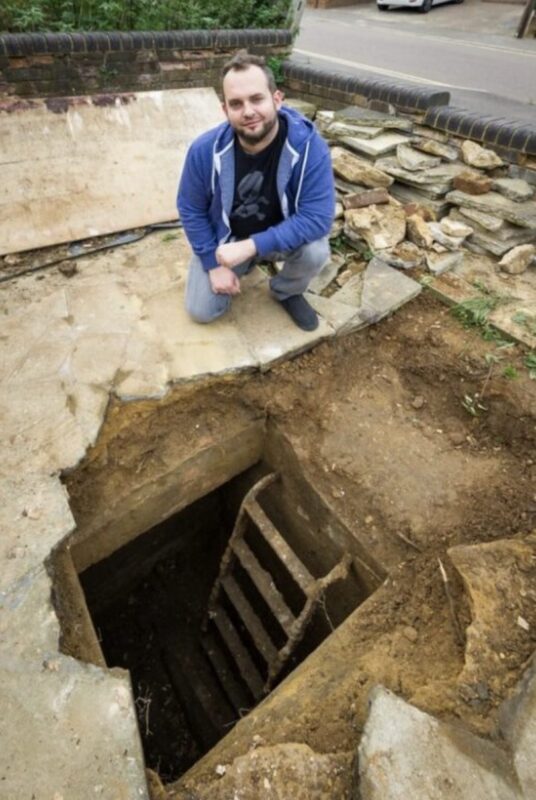
“Well, this day could have been even worse,” he exclaimed.
When he knelt down to examine the issue more closely, Marks noticed that the driveway cover was cracked and the frame was starting to shift.
After removing all the dust, he saw a piece of metal underneath. Not knowing what was beneath the driveway, Marks grabbed the piece of metal and tried to remove it, but with no success.
Not understanding what to do, he called his father for help. Together, they managed to remove a large layer of dense dust, which eventually led to an opening. Inside, they found an old, rusty ladder, and both men descended to see where it led.
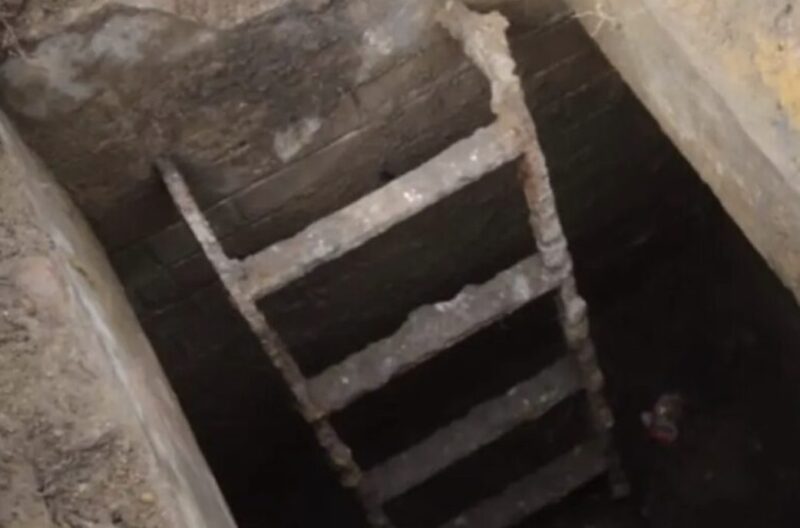
To fully grasp the significance of this story, some additional context is needed. The house had previously belonged to a retired couple before Simon purchased it for £400,000 ($518,000).
The elderly couple had built the house themselves and therefore knew that there was a cave beneath the property. After all, they had to fill in the underground space before starting to build their house. They did not inform Simon about it when he bought the property.

During World War II, cities and villages across England were affected by enemy air raids. To try to save as many lives as possible, Sir John Anderson was appointed to protect the population during these raids. It was thanks to him that this simple shelter was created.
Marks and his father plan to restore the shelter as they believe it is an important historical monument. They feel that even though this period of history is behind us, it should not be forgotten, as it provides a good insight into that era.